


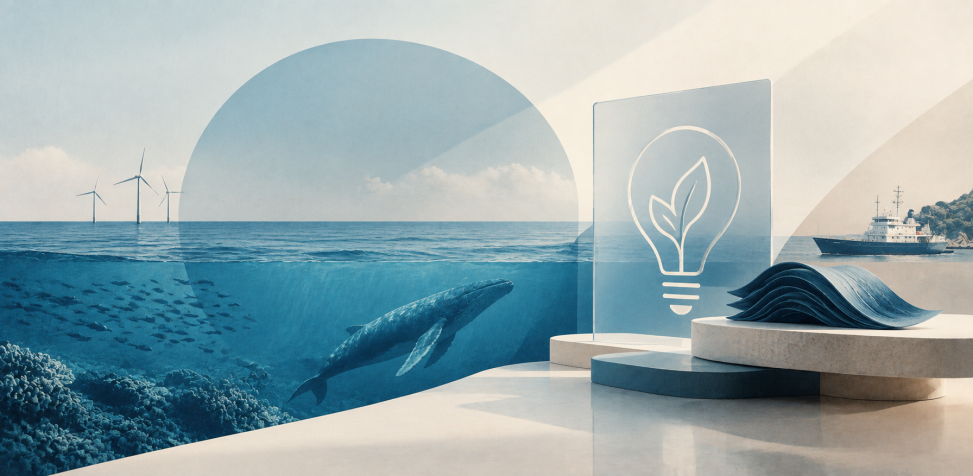
The Blue Economy and Intellectual Property: Protecting Innovation Without Privatizing the Ocean
Fikri Mülkiyet Tuğba Güleş - 06.09.2026 [email protected]The ocean is both a life-support system and an economic space. It covers more than 70 per cent of the planet, produces around half of the oxygen we need, absorbs a significant share of human-generated carbon emissions and helps regulate the global climate (United Nations, “Link”). It also supports food production, transport, energy, tourism, employment and the livelihoods of coastal communities.
The “blue economy” seeks to bring these ecological and economic dimensions together. It is generally understood as the sustainable use of ocean resources for economic growth, improved livelihoods and employment while preserving ocean ecosystems (World Bank, “Link”). It includes traditional sectors; fisheries, maritime transport, ports and coastal tourism as well as emerging industries such as offshore renewable energy, smart aquaculture, marine biotechnology, desalination, seabed and ocean mapping, autonomous vessels, marine robotics and digital ocean services.
This is not a marginal economy. According to the OECD, the global ocean economy doubled in real terms from USD 1.3 trillion in 1995 to USD 2.6 trillion in 2020 and accounted for approximately 3-4 per cent of global gross value added. If past trends continue, it could reach USD 5.1 trillion by 2050 (OECD, “Link”. Its future, however, cannot be measured by growth alone. Overfishing, pollution, biodiversity loss, ocean warming and unequal technological capacity show why “blue” must mean sustainable and inclusive: not simply maritime.
Why Intellectual Property Matters?
The future blue economy will be increasingly knowledge intensive. Offshore wind and marine energy require advanced turbines, floating platforms, mooring systems and subsea cables. Sustainable aquaculture depends on breeding, disease control, sensors and low-impact feed. Cleaner shipping needs alternative fuels, propulsion technologies and energy-efficient vessel design. Scientists and businesses are also developing marine-derived medicines, biodegradable materials, pollution-removal technologies and AI systems that analyze ocean data.
Intellectual property (IP) connects these inventions and creative outputs to investment, collaboration and markets. Patents can protect qualifying technical solutions and make high-risk marine research more attractive to investors. Because patents are transferable and licensable, they can also support partnerships between universities, start-ups and established maritime firms. Publication of patent documents adds technical information to the public domain and can guide further research.
Other IP rights perform complementary functions. Trade secrets protect algorithms, manufacturing methods, operational knowledge and confidential datasets. Copyright and, where applicable, database rights may protect software, digital maps and the original structure of ocean-data platforms. Industrial designs protect the appearance of vessels, equipment and consumer products. Trademarks and geographical indications can communicate origin, quality and sustainability in seafood, coastal tourism and marine products, allowing responsible practices to acquire market value.
IP is therefore part of the blue economy’s infrastructure. Yet it can also become a barrier. Exclusive rights may increase prices, fragment technological standards or require innovators to negotiate multiple licences. Trade secrecy can restrict interoperability and environmental scrutiny. Control over large datasets and analytical tools may allow a few firms to dominate digital-ocean markets, even where the foundational data were publicly funded.
The challenge is especially acute for clean technologies. WIPO describes IP as a “double-edged sword”: patents incentivize costly research but restrict access by design, while delayed diffusion of climate technologies increases environmental harm (WIPO, “Link”). The central policy question is thus not whether the blue economy should have stronger or weaker IP. It is how IP should be designed and managed to reward innovation while accelerating the circulation of technologies needed for a healthy ocean.
The Future of Blue-Economy IP Policy
A future-oriented blue-economy IP policy should begin with five principles.
First, protection must be matched with diffusion. Patents should remain available for genuine marine inventions, but licensing strategies should encourage deployment. Non-exclusive licences, patent pools, cross-licensing and standardized agreements can reduce transaction costs, particularly where complex technologies incorporate several protected components.
Second, public funding should carry out public-interest conditions. Research grants for ocean observation, pollution control or climate adaptation can require data-management plans, transparent ownership rules and reasonable access to resulting technologies. Exclusive commercial rights may sometimes be justified, but they should not automatically close foundational research infrastructure.
Third, ocean data should be treated as a shared innovation resource. UNESCO’s Ocean Decade calls for equitable access to data, technology and computing capacity (Link”). Open licences, interoperable formats and clear commercial-reuse terms can preserve broad access while allowing companies to protect genuinely value-added software and services.
Fourth, IP policy must include technology transfer and capacity-building. Formal availability of a patent or database is meaningless where researchers lack finance, laboratories, digital infrastructure or legal expertise. Preferential licensing, collaborative R&D, research exceptions and support for local technology-transfer institutions can help distribute innovative capacity rather than merely published information.
Fifth, IP intelligence should guide sustainable investment. Patent landscaping can reveal technological concentration, potential research partners and neglected fields. OECD indicators, for example, identify ocean renewable energy as a leading area of ocean-related environmental invention, while innovation directed at ocean-pollution abatement has declined (OECD, “Link” (2025). IP data can therefore help direct public funding toward urgent but commercially underserved problems.
Ultimately, blue-economy IP policy must distinguish ownership of human ingenuity from ownership of the ocean itself. Patents may protect a new turbine, sensor or treatment process; copyright may protect software; trademarks may protect commercial reputation. None should become a route to enclosing the underlying marine commons.
The blue economy’s promise lies in using knowledge to create prosperity while restoring, rather than exhausting, ocean health. IP can support that promise when it operates not only as a mechanism of exclusion, but also as a framework for licensing, collaboration, disclosure and responsible technology transfer. The question for the future is therefore not simply who owns blue innovation, but how that ownership can serve the ocean on which all economies ultimately depend.


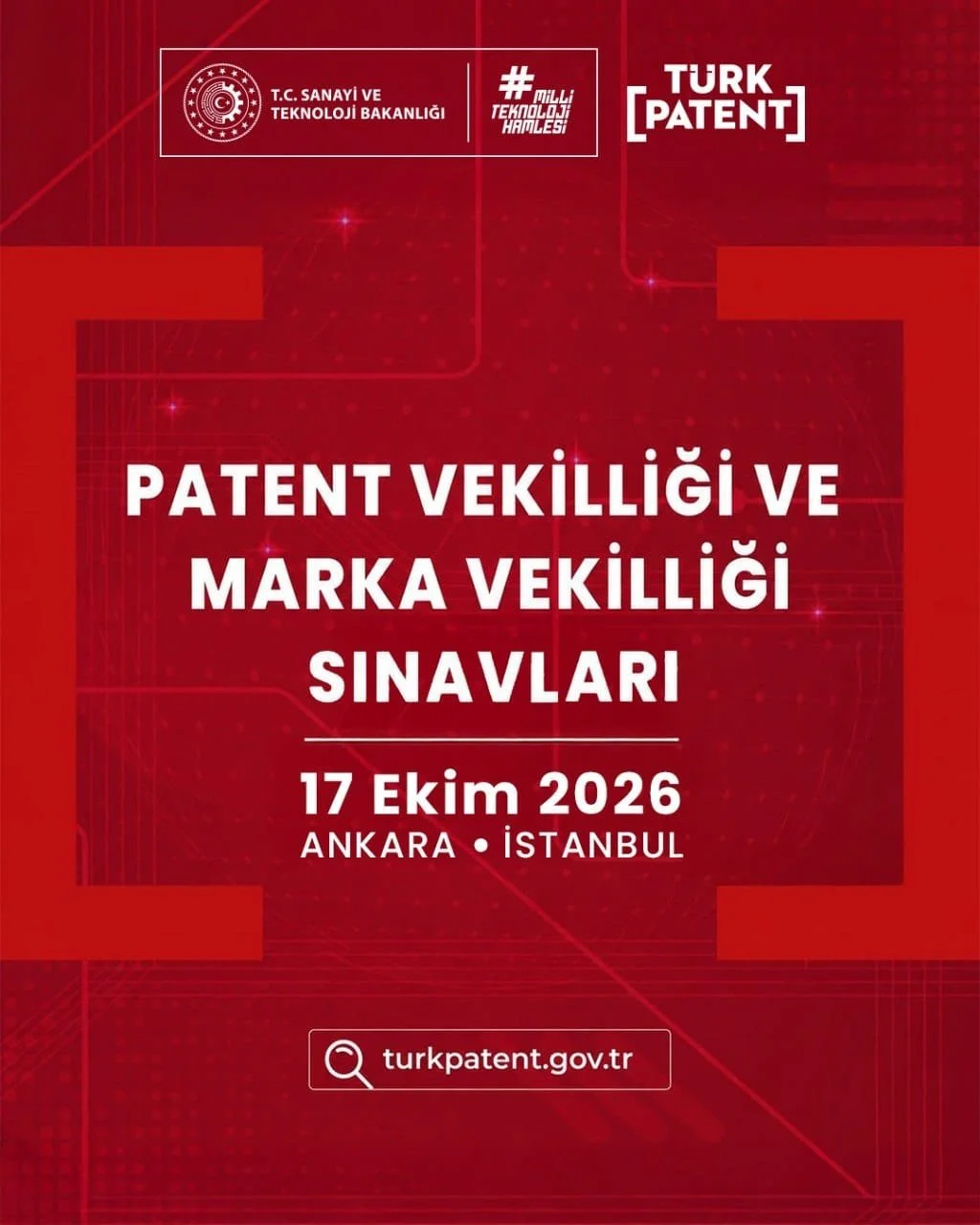
Vekillik Sınavı 17 Ekim 2026 Tarihinde Yapılacak
30.Tem.2026

Dünya Fikri Mülkiyet Günümüz Kutlu Olsun
26.Nis.2026

II. Haberin Telifi ve Medyada Yapay Zeka Sempozyumu | 02 Aralık 2024
26.Kas.2024

III. Bilişim ve Teknoloji Hukuku Sempozyumu 29-30 Kasım 2024
12.Kas.2024

V. Fikri Mülkiyet Hukuku Uluslararası Sempozyumu 30 Kasım – 1 Aralık 2023
22.Eki.2023

V. Fikri Mülkiyet Hukuku Uluslararası Sempozyumu | 30 Kasım 2023
20.Eyl.2023

Patent ve Marka Vekilliği Sınavı Hazırlık Eğitimi | 30 Eylül – 19 Ekim 2023
13.Eyl.2023

Uluslararası Kapadokya IP Günleri | 7-9 Eylül 2023
23.Ağu.2023

3. Kültür Endüstrisi ve Telif Hakları Sempozyumu – 08.12.2023
05.Ağu.2023

Fikri Mülkiyet Hukukunda Güncel Gelişmeler Uluslararası Sempozyumu 23 Haziran 2023
12.Haz.2023