



Wearable Smart Fashion Products: What does intellectual property law protect and how?
Tasarım Barış Gözübüyük - 11.05.2026 [email protected]Are Fashion Products Becoming “Smart”? Do We Really Need Smart Fashion?
These days, almost everything is becoming “smart.” Smart watches, smart homes, smart fashion products - the list goes on. Of course, the word smart does not mean that these products possess actual intelligence. What it really refers to is the integration of digital technologies into everyday objects. Products that once served only basic functions are now capable of interacting with users, collecting data, and offering entirely new features.
Imagine wearing a jacket during a mountain hike that contains integrated sensors capable of monitoring your heart rate, oxygen saturation, blood pressure, and body temperature in real time. In an emergency, this data could automatically be transmitted — together with your location — to the nearest rescue or medical unit through other embedded systems within the jacket. Considering how many outdoor athletes lose their lives to hypothermia during mountain expeditions every year, it is not difficult to see the life-saving potential of wearable smart fashion products.
Smart fashion products are not limited to garments containing sensors, microchips, or electronic circuits. In many cases, fabrics themselves are made “smart” through technological intervention in their chemical composition. One example is fabrics that react to body temperature or UV radiation by changing colour once certain thresholds are exceeded. It has also been suggested that such technologies may improve user safety in certain contexts. (See.)
Smart fashion products designed for workers operating in high-risk sectors such as mining, energy, defence, or firefighting may well become indispensable in the near future. On the consumer side, owning smart fashion products may not only enhance comfort in daily life but also allow users to express a more stylish and technologically sophisticated identity. Fabrics sensitive to temperature or UV exposure, for instance, may help protect users from harmful environmental conditions.
Intellectual Property Law Meets Wearable Smart Fashion
As the fashion industry moves toward smart fashion, companies investing in these technologies will naturally seek legal protection for their products. At this point, intellectual property law becomes central. Smart fashion products are inherently multi-layered products. As a result, their protection may involve several different intellectual property rights operating simultaneously. Let us examine these dimensions one by one.
a) First Layer: Software
Almost all smart fashion products are software-based to some extent. Under article 2/1 of the Turkish Law on Intellectual and Artistic Works (Law No. 5846), computer programs bearing the author’s individuality are protected as literary and scientific works. Accordingly, software integrated into smart fashion products may benefit from copyright protection, provided that it reflects the originality of its creator.
At the same time, these software systems generally operate together with sensors and hardware components. In other words, the software forms part of a broader system designed to solve a technical problem. This naturally raises the question of whether such products may also qualify for patent protection as computer-implemented inventions. Depending on the specific circumstances of the case, patent protection may indeed become available.
b) Second Layer: Sketches and Designs
The journey of a fashion product usually begins with a sketch. “Fashion sketches may benefit from copyright protection as artistic works, provided that they display sufficient originality. In addition, where the product appearance embodied in such sketches satisfies the requirements of novelty and individual character, it may simultaneously benefit from design protection under the principle of cumulative protection.
Effective protection of designs is critically important for the fashion industry (Link). This importance becomes even more pronounced in the context of smart fashion products. Many of these products contain technological elements such as microchips or sensors. The way these elements are integrated into the product, and whether they remain visible from the outside, may become one of the defining aspects of the overall design.
No matter how technologically advanced a fashion product may be, its commercial success is likely to remain limited if consumers do not find it aesthetically appealing. In the fashion industry, unregistered design protection often plays a significant role (Link). Nevertheless, when it comes to smart fashion products, registered design protection is likely to become more prominent. Unlike traditional fashion items, smart fashion products are typically developed through substantial R&D investments. Given their higher commercial value, rights holders will inevitably prefer stronger and broader forms of protection.
c) Third Layer: Trade Marks
Fashion brands are vital to the fashion industry. In the case of smart fashion products, however, their importance becomes even greater. Technical malfunctions in smart fashion products may directly threaten users’ safety and health. Ordinary consumers cannot reasonably be expected to possess advanced knowledge regarding the technical infrastructure of such products.
Consumers therefore tend to purchase these products based on trust in the brand itself. Put differently, they are inclined to think along the lines of: “This brand is reliable; the technological infrastructure behind its smart products must also be reliable.” In this sense, purchasing decisions are heavily influenced by the confidence consumers place in the trade mark. For this reason, the guarantee function of trade marks becomes considerably more visible in the context of smart fashion products.
d) Fourth Layer: Patents and Utility Models
The technical dimension of smart fashion products may also fall within the scope of patent and utility model protection. Sensors, smart textile technologies, and other technical components used in these products may qualify as inventions.
Where such inventions are novel, industrially applicable, and involve an inventive step, patent protection may be available. However, the fact that an invention does not qualify for patent protection should not be interpreted as meaning that it is left entirely without intellectual property protection. Technical solutions that are novel and industrially applicable but fail to meet the inventive step requirement may still benefit from utility model protection.
Conclusion
Smart fashion products are likely to become increasingly widespread in the coming years and may eventually reach significant commercial volumes. In parallel with this development, the effective protection of such products under intellectual property law will become an increasingly important issue.
References
Marta Nowak, ‘Colour-Changing Fabrics: Chemical Innovations for Adaptive Fashion’ (2024) 12(5) Journal of Fashion Technology & Textile Engineering DOI: 10.4172/2329-9568.1000376.
Barış Gözübüyük, ‘Moda Hukuku ve Moda Hukuku Dersleri Üzerine Düşünceler’, Fikri Mülkiyet https://fikrimulkiyet.com/fikri-mulkiyet/moda-hukuku-ve-moda-hukuku-dersleri-uzerine-dusunceler, accessed 9 May 2026.


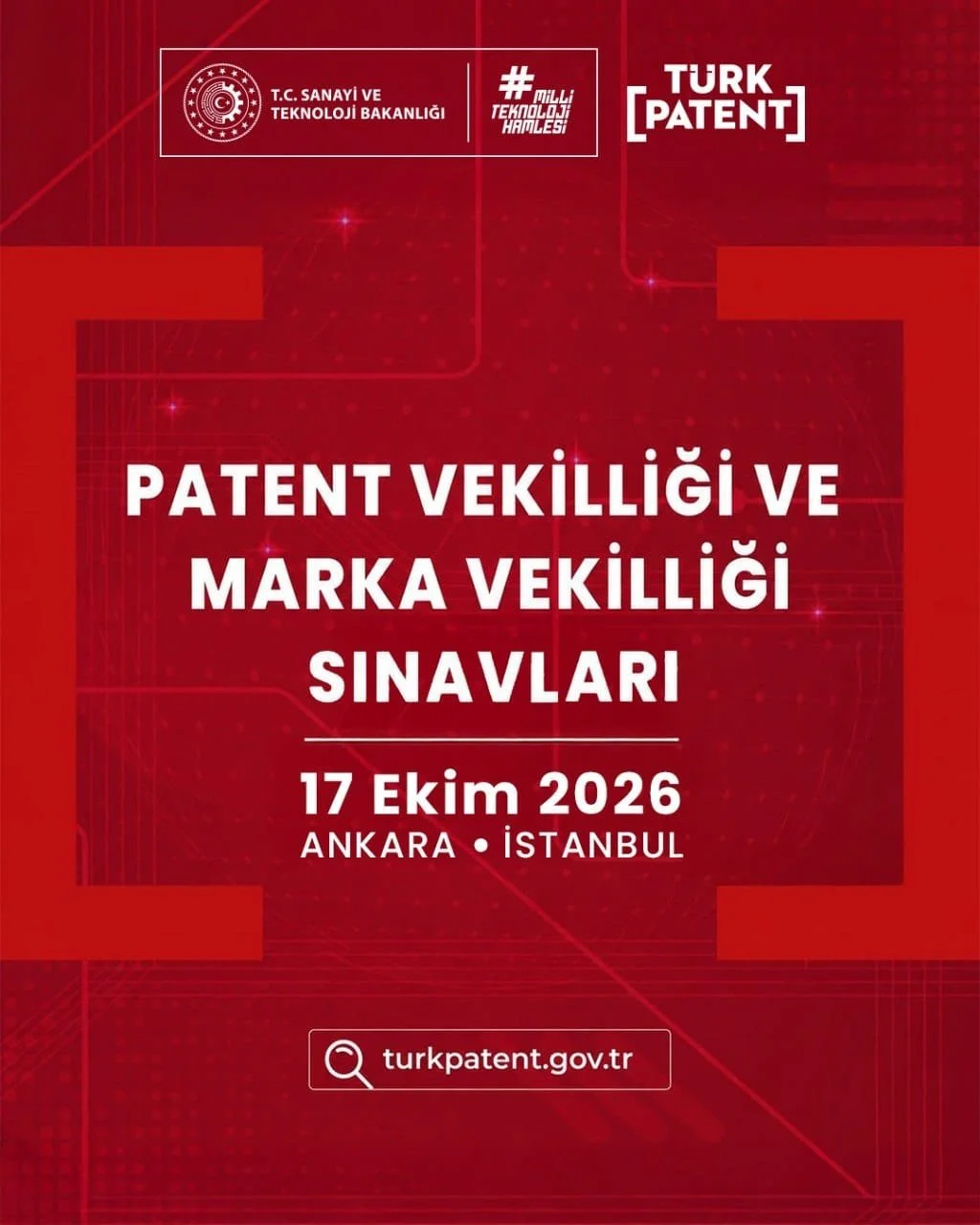
Vekillik Sınavı 17 Ekim 2026 Tarihinde Yapılacak
30.Tem.2026

Dünya Fikri Mülkiyet Günümüz Kutlu Olsun
26.Nis.2026

II. Haberin Telifi ve Medyada Yapay Zeka Sempozyumu | 02 Aralık 2024
26.Kas.2024

III. Bilişim ve Teknoloji Hukuku Sempozyumu 29-30 Kasım 2024
12.Kas.2024

V. Fikri Mülkiyet Hukuku Uluslararası Sempozyumu 30 Kasım – 1 Aralık 2023
22.Eki.2023

V. Fikri Mülkiyet Hukuku Uluslararası Sempozyumu | 30 Kasım 2023
20.Eyl.2023

Patent ve Marka Vekilliği Sınavı Hazırlık Eğitimi | 30 Eylül – 19 Ekim 2023
13.Eyl.2023

Uluslararası Kapadokya IP Günleri | 7-9 Eylül 2023
23.Ağu.2023

3. Kültür Endüstrisi ve Telif Hakları Sempozyumu – 08.12.2023
05.Ağu.2023

Fikri Mülkiyet Hukukunda Güncel Gelişmeler Uluslararası Sempozyumu 23 Haziran 2023
12.Haz.2023