


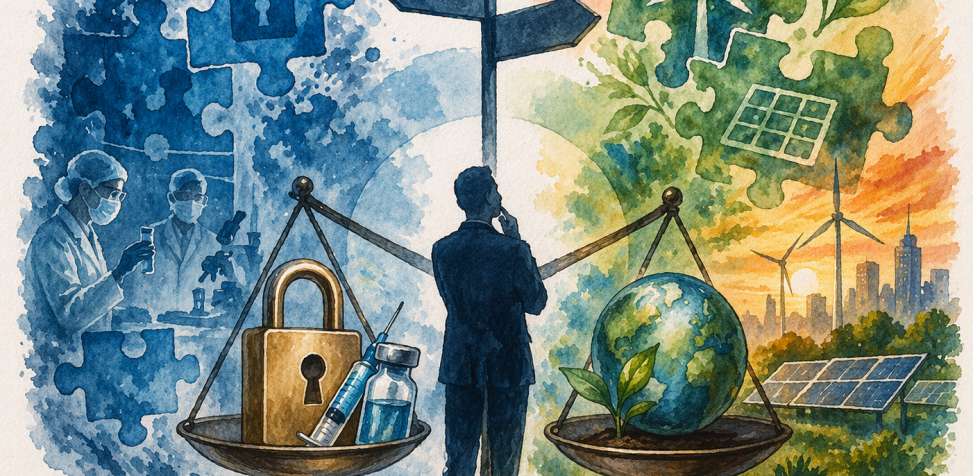
From Vaccines to Climate Tech: Are We Repeating the Same IP Mistakes?
Fikri Mülkiyet Tuğba Güleş - 10.04.2026 [email protected]When COVID-19 vaccines first rolled out, the dominant narrative celebrated scientific triumph. Yet beneath that success lay a more complex legal story. Patents were not the only obstacle, but they became the focal point of a deeper structural tension: how to balance innovation incentives with equitable access. Today, as the global race for climate technologies accelerates, a familiar pattern is emerging. The critical question is no longer whether intellectual property (IP) will shape the transition to a low-carbon economy, but whether it will do so in ways that replicate past failures. Against this backdrop, the central claim is that, despite the lessons of the pandemic, current IP frameworks governing climate technologies risk reproducing the same structural access problems seen in COVID-19 vaccines unless access considerations are embedded into the system from the outset.
A Familiar Script: Innovation First, Access Later
The pandemic exposed a fundamental sequencing problem in global IP governance. Innovation was prioritized, while access was treated as a secondary concern. This tension became visible in debates over the TRIPS waiver at the World Trade Organization. While some states advocated temporary suspension of IP protections to expand vaccine production, others insisted that existing mechanisms particularly compulsory licensing were sufficient.
The compromise that followed was narrow and politically constrained. More importantly, it confirmed a broader reality: IP exceptionalism in times of crisis remains difficult to achieve in practice.
In the climate context, the same logic persists. Patent protection continues to serve as the primary tool for stimulating innovation, while access is deferred to indirect mechanisms such as voluntary licensing, technology transfer initiatives, or market diffusion. The result is a system that again prioritizes invention over distribution.
Climate Technologies: A New Arena, Old Dynamics
Climate technologies differ from vaccines in one key respect: they are not tied to a single emergency but span multiple sectors and evolve cumulatively over time. This makes IP both more embedded and more influential.
Recent policy developments reinforce this trend. The EU Green Deal promotes green innovation through strong IP incentives. The United States similarly combines industrial policy with robust patent protection. Türkiye aligns with these approaches, encouraging renewable energy innovation within existing IP frameworks.
Yet this convergence masks a structural risk: the growing concentration of patents in critical climate technologies, particularly in areas such as hydrogen, battery storage, and carbon capture. Early evidence suggests that a relatively small number of actors are accumulating large patent portfolios, raising concerns about licensing barriers and restricted market entry.
If this trajectory continues, climate technologies may become subject to what might be called “green exclusivity”: a system in which access is mediated through proprietary control rather than coordinated global dissemination.
Compulsory Licensing Revisited: Limited in Practice
In theory, the IP system includes safeguards. Compulsory licensing allows states to authorize use of patented technologies without the right holder’s consent in the public interest. However, the pandemic revealed the practical limits of this tool.
Compulsory licensing proved politically sensitive, procedurally complex, and difficult to implement at scale. Few countries relied on it effectively during COVID-19, and even fewer managed to expand production through its use.
Recent reforms suggest some movement toward simplifying these mechanisms, including discussions about their applicability to climate technologies. Yet these efforts remain fragmented and reactive. The core problem persists: compulsory licensing is an exception within a system built around exclusivity, not a structural solution.
Private Ordering and Its Limits
As public tools remain constrained, governance increasingly shifts toward private mechanisms, particularly licensing. During the pandemic, voluntary licensing arrangements contributed (albeit unevenly) to vaccine distribution. In the climate context, similar approaches are emerging through patent pools and collaborative initiatives.
However, reliance on voluntary mechanisms raises important concerns. Licensing agreements are often opaque, territorially limited, and shaped by strategic considerations. Moreover, the imbalance of bargaining power between technology holders and adopters can restrict meaningful access.
This raises a fundamental question: should access to essential climate technologies depend on private contractual arrangements, or should it be built into the structure of IP law itself?
The issue becomes even more pressing as certain technologies move toward standardization. In areas such as hydrogen infrastructure or smart energy systems, the emergence of standard-essential patents (SEPs) introduces the risk of technological bottlenecks. Without effective commitments to fair, reasonable, and non-discriminatory (FRAND) licensing, these technologies could hinder rather than facilitate the green transition.
Comparative Perspectives: Different Models, Same Risk
Although the EU, US, and Türkiye adopt different regulatory approaches, they share a common reliance on IP as a central innovation mechanism. The EU integrates sustainability goals more explicitly into its legal frameworks but has not fundamentally rebalanced exclusivity and access. The US continues to favor market-driven solutions, with minimal structural intervention in IP. Türkiye, positioned between these models, faces the challenge of promoting domestic innovation while ensuring access to foreign technologies.
Despite these variations, the underlying issue remains consistent: the global IP system is not designed to address collective action problems such as climate change.
Breaking the Pattern: Toward Access-Oriented IP Design
If the pandemic demonstrated anything, it is that reactive adjustments are insufficient. The challenge is not merely to use existing tools more effectively, but to rethink how IP systems are structured in the first place.
This does not require abandoning patent protection. Rather, it calls for integrating access considerations into the design of IP rights from the outset. Several policy directions merit attention:
Such measures would not eliminate the tension between innovation and access, but they could recalibrate it in a more balanced and forward-looking way.
Conclusion: Learning or Repeating?
The shift from vaccines to climate technologies represents a change in context, but not necessarily in governance logic. The same structural features; strong exclusivity, limited flexibility, and reliance on private orderingare being reproduced.
The uncomfortable conclusion is this: if IP law continues to treat access as an exception rather than a design principle, it risks becoming part of the climate problem rather than its solution.
Unlike the pandemic, the climate transition offers an opportunity for anticipatory reform. Whether that opportunity will be seized remains uncertain. What is clear, however, is that repeating past mistakes will come at a far greater cost.


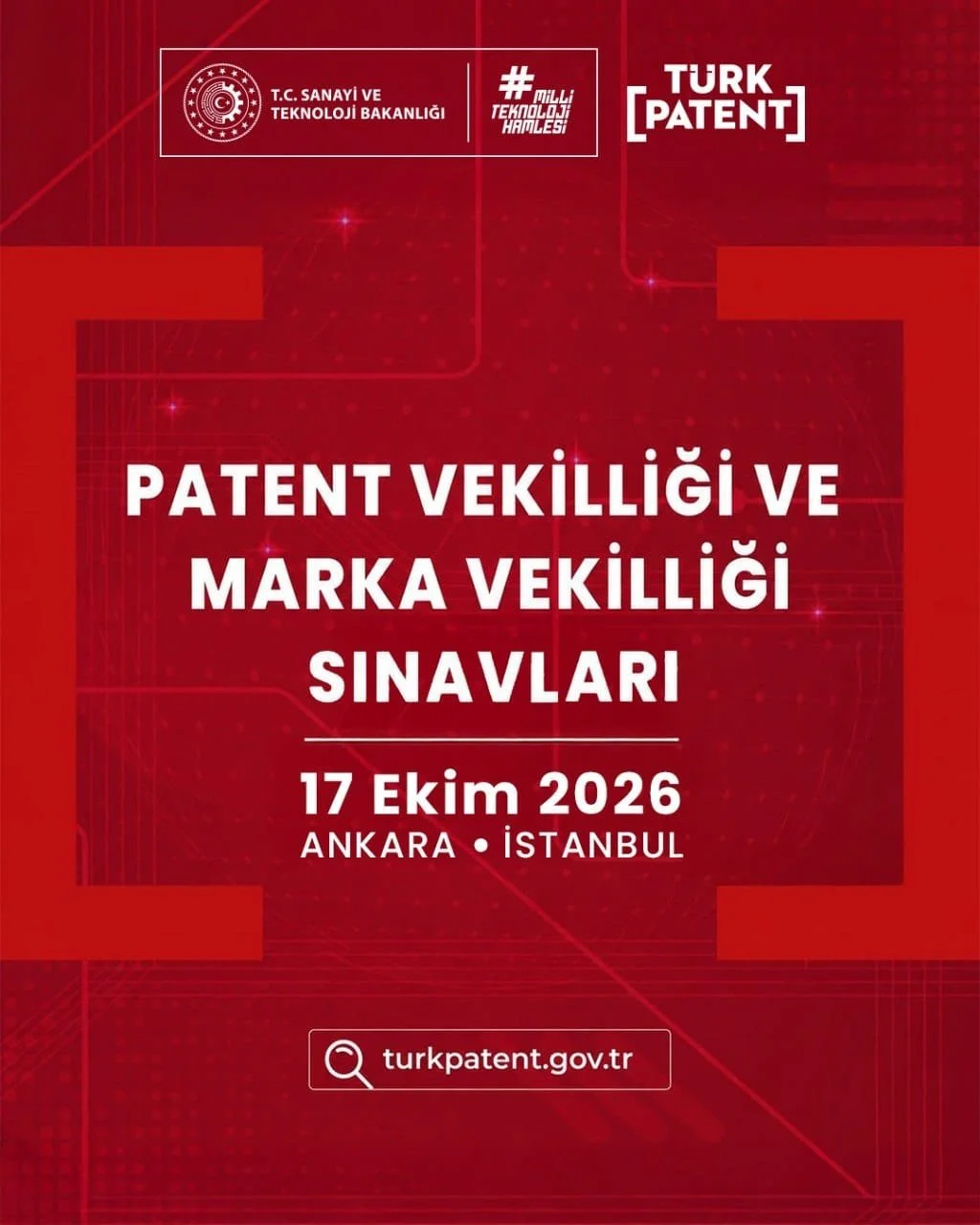
Vekillik Sınavı 17 Ekim 2026 Tarihinde Yapılacak
30.Tem.2026

Dünya Fikri Mülkiyet Günümüz Kutlu Olsun
26.Nis.2026

II. Haberin Telifi ve Medyada Yapay Zeka Sempozyumu | 02 Aralık 2024
26.Kas.2024

III. Bilişim ve Teknoloji Hukuku Sempozyumu 29-30 Kasım 2024
12.Kas.2024

V. Fikri Mülkiyet Hukuku Uluslararası Sempozyumu 30 Kasım – 1 Aralık 2023
22.Eki.2023

V. Fikri Mülkiyet Hukuku Uluslararası Sempozyumu | 30 Kasım 2023
20.Eyl.2023

Patent ve Marka Vekilliği Sınavı Hazırlık Eğitimi | 30 Eylül – 19 Ekim 2023
13.Eyl.2023

Uluslararası Kapadokya IP Günleri | 7-9 Eylül 2023
23.Ağu.2023

3. Kültür Endüstrisi ve Telif Hakları Sempozyumu – 08.12.2023
05.Ağu.2023

Fikri Mülkiyet Hukukunda Güncel Gelişmeler Uluslararası Sempozyumu 23 Haziran 2023
12.Haz.2023